

The U.S. Environmental Protection Agency (EPA) states that indoor air can sometimes contain higher concentrations of pollutants than outdoor air, even in large urban environments. Buildings constantly change over time through remodeling projects, layout modifications, and upgrades intended to improve comfort, appearance, or functionality. Walls are moved, spaces are opened, storage areas are repurposed, and airflow patterns shift. These adjustments often improve usability, yet they can also alter the indoor environment in ways people do not immediately notice.
Building managers and property owners increasingly review environmental conditions during renovation planning because physical changes sometimes affect moisture movement, ventilation, and occupancy patterns. Some informational resources discussing professional treatment as a broader building management consideration also examine how environmental conditions may influence long-term maintenance planning. These discussions are generally part of wider facility management conversations rather than isolated responses to a specific issue.
Understanding Environmental Shifts Inside Buildings
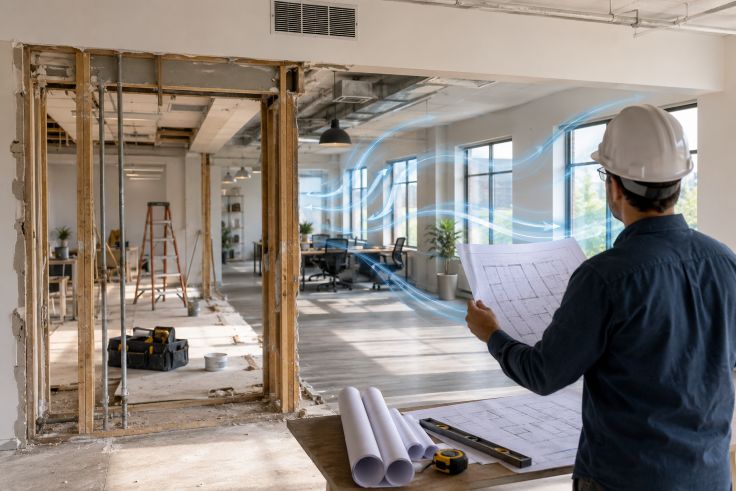
Buildings operate as connected systems. A change in one area often influences conditions somewhere else. When walls are removed to create open floor plans, airflow behaves differently. New windows can alter temperature distribution. Additional storage rooms may affect circulation patterns or create enclosed spaces with reduced ventilation.
Research from The National Institute for Occupational Safety and Health (NIOSH) indicates that indoor environments are affected by multiple factors, including humidity, ventilation, temperature control, and occupancy levels. These variables interact continuously.
Consider a relatively simple renovation involving the conversion of a closed office into an open workspace. The intended goal may be greater collaboration and increased natural light. The visible result often appears positive. However, airflow routes may also shift, causing some areas to become warmer while others retain more moisture.
People usually notice obvious outcomes first. A room may feel larger, brighter, or easier to use. Less visible environmental adjustments sometimes develop gradually and receive attention only after patterns emerge.
Intended Improvements Versus Unintended Consequences
Renovations generally solve existing problems. Property owners may seek better aesthetics, improved energy efficiency, or more practical use of space. The intended advantages are usually clear.
Yet building modifications can introduce secondary effects that were not part of the original plan.
Examples of Common Layout Changes
- Removing interior walls to create open spaces
- Converting storage areas into occupied rooms
- Adding partition walls
- Changing HVAC layouts
- Installing larger windows
- Repurposing basements or attics
Each modification changes environmental behavior inside a structure.
The Centers for Disease Control and Prevention (CDC) notes that ventilation influences indoor environmental quality because airflow affects temperature regulation and moisture control. Small alterations can change how air moves across surfaces and through rooms.
For example, enclosed corners created by new partition walls can sometimes reduce airflow circulation. Moisture may remain trapped longer in certain areas. Storage spaces located near exterior walls can experience different temperature conditions compared with surrounding rooms.
Data from The EPA also suggests that moisture management remains one of the most important factors in preventing indoor environmental issues. Excess moisture may contribute to mold development and other maintenance concerns.
This creates an interesting contrast. Renovations are intended to improve living or working conditions, yet environmental systems occasionally respond in unexpected ways.
How Layout Changes Can Influence Pest Management Considerations
Environmental shifts sometimes intersect with pest management discussions because structural conditions influence how various organisms interact with indoor spaces.
Pest activity is not determined by a single cause. Experts note that access to food, moisture, shelter, and movement pathways can influence behavior.
When buildings change physically, some of these factors may change as well.
For example, newly installed cabinetry can create concealed spaces behind walls. Converted storage areas may introduce additional clutter or reduced visibility. Modified utility pathways sometimes leave small openings around pipes or wiring routes.
The National Pest Management Association explains that gaps, moisture sources, and hidden spaces can influence long-term building maintenance considerations. The discussion extends beyond visible pest activity and often includes environmental conditions that support prevention efforts.
Building managers sometimes observe patterns such as:
- Reduced visibility behind fixtures and storage units
- New access points around construction modifications
- Changes in humidity levels
- Areas with lower air circulation
- Temporary disruptions during renovation work
These conditions do not automatically create problems. They simply represent factors that may require observation after physical changes occur.
Contrasting Immediate Benefits With Long-Term Building Performance
The relationship between renovation goals and environmental effects creates an interesting balance.
One perspective emphasizes visible improvements. Open spaces increase flexibility. Additional rooms improve functionality. Updated layouts can support changing occupant needs.
Another perspective focuses on building systems operating behind the surface. Air movement, moisture behavior, and environmental conditions continue responding long after construction crews leave.
This contrast does not suggest that renovations create negative outcomes. Rather, it highlights the importance of understanding buildings as interconnected systems.
Research published through The American Society of Heating, Refrigerating and Air-Conditioning Engineers (ASHRAE) consistently supports integrated approaches to indoor environmental quality. Their work emphasizes that ventilation, thermal comfort, and building design interact closely.
Viewing renovations through both perspectives often creates a more complete picture.
Where Building Management Discussions Usually Expand
Environmental reviews increasingly extend beyond construction planning itself. Property owners and facility managers frequently discuss maintenance planning, air quality assessments, moisture monitoring, and preventative measures after major modifications.
Pest management considerations occasionally appear within these broader discussions because environmental conditions influence multiple building systems simultaneously.
Maintenance professionals may examine questions such as:
- Has airflow changed significantly?
- Are there newly enclosed spaces?
- Do moisture levels vary between rooms?
- Have structural openings appeared after construction?
- Should routine monitoring practices change?
These conversations generally focus on observation and prevention rather than reacting after conditions become larger concerns.
READ ALSO: Sustainable House Cleaning: How Services Can Reduce Waste
Conclusion
Building layout changes are often driven by practical goals such as improving aesthetics, efficiency, or space utilization. Most modifications achieve their intended purpose and improve how environments function for occupants.
Yet buildings behave as systems where one adjustment may influence several others. Research from organizations including EPA, CDC, ASHRAE, and NIOSH shows that airflow, moisture movement, and indoor environmental conditions remain closely connected.
Broader discussions surrounding environmental monitoring, preventative maintenance, and structural assessments sometimes include pest management considerations because physical environments evolve after renovations occur. Understanding these relationships can help building owners and managers recognize that successful design changes often involve more than appearance alone. Long-term performance frequently depends on seeing how visible improvements and less visible environmental factors continue interacting over time.